LAST WEEK I entered my first foot race in almost a decade. I was a little out of practice but I thought: why not?
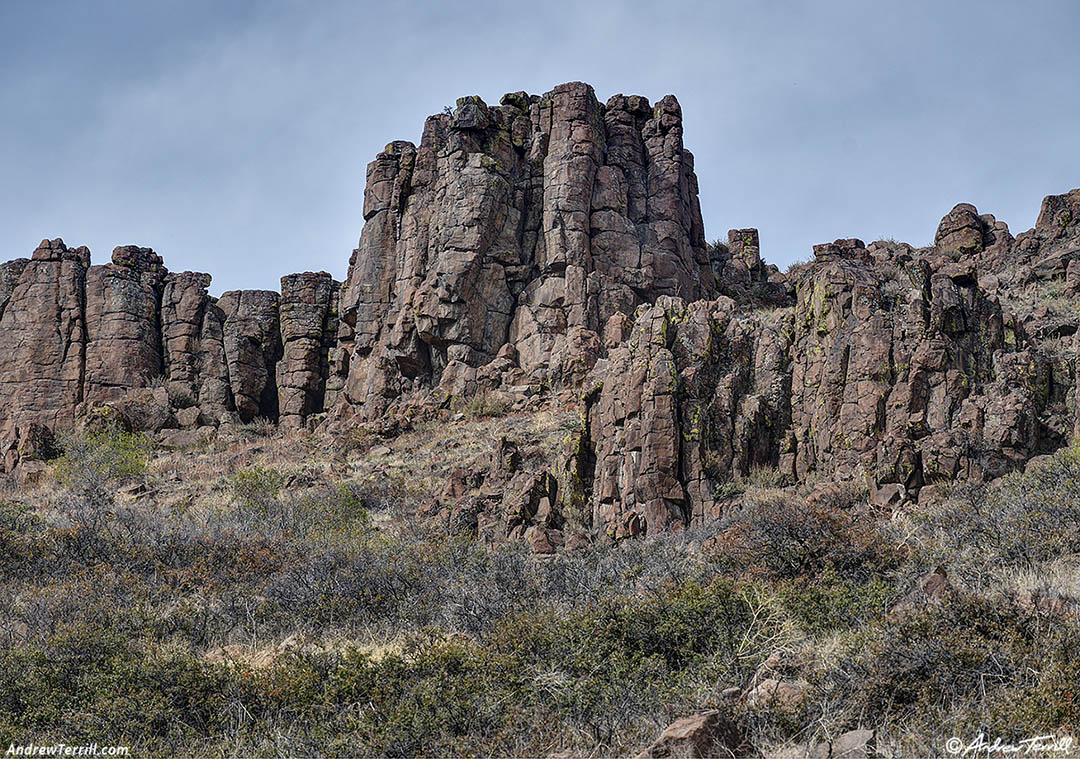
The race took place upon the mountains above my home town. Technically, it wasn’t one race but five. The concept was simple: five different routes, five different mountains, five days in which to run them all. There were no entry fees, no official time keepers (instead, a website for logging times), and no prizes (aside from bragging rights). The event was friendly, informal, and local. From my perspective, it was trail racing at its best.
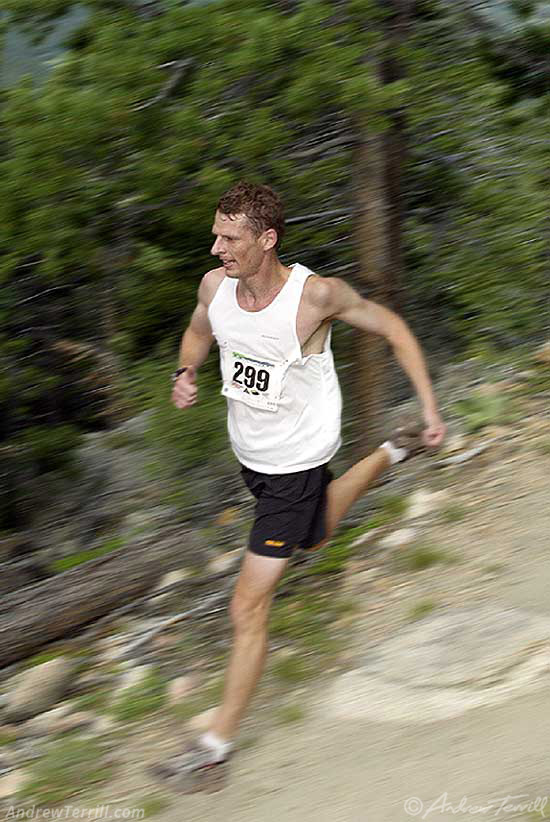
Naturally, being who I am, I didn’t only run to take part but also to race – well, to find out if I still had what it takes to race. Although I’ve always run primarily for the joy of it, I went through a short spell in my early forties when I raced a lot. Competition added an extra dimension to running, a self-discovery dimension. And it was fun, especially when I won the occasional trail race. But that had been then. As for now, could I re-experience what I’d once known, relive the life-affirming sensations racing had once brought? Could I still find value in flying through nature the way I once had?
The routes all led up trails that were steep and rocky, and the combined distance was thirty miles, with 6,000 feet of ascent. I regularly run thirty miles a week so didn’t doubt I’d finish. The real question was: how fast could I do it? Typically, I only run one hard session a week – it’s all my middle-aged body can handle. (Although it’s questionable it can even handle that.) Pushing hard five days-running was going to take a toll.
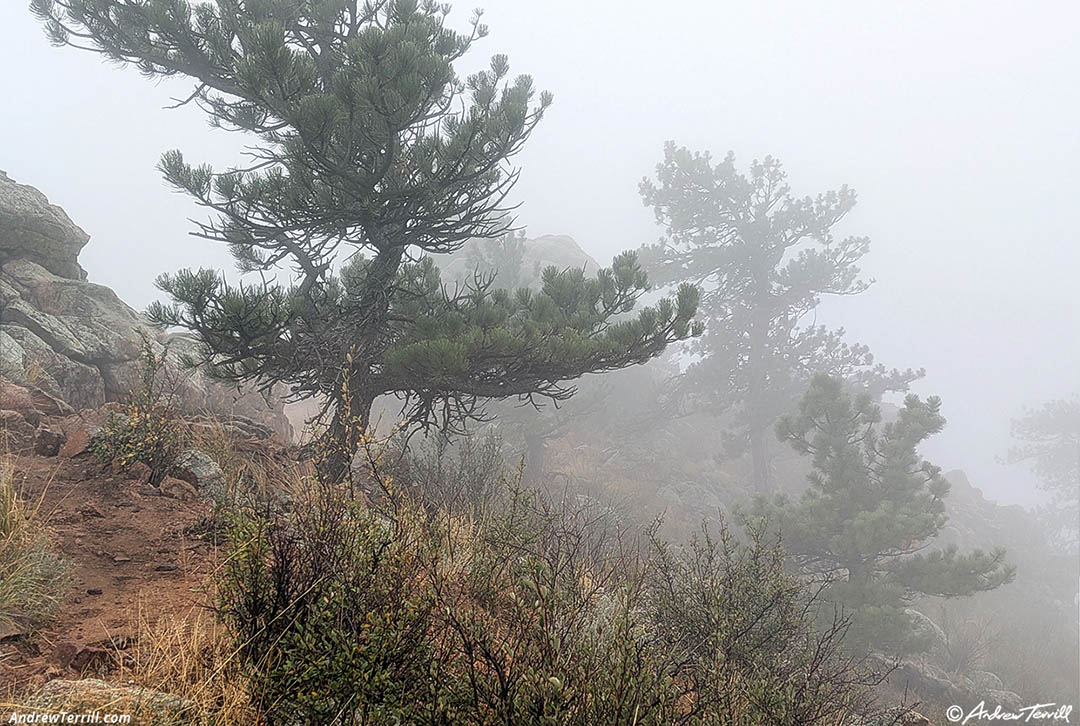
On a foggy, drizzly Monday morning I attacked the first route as though it were the only route, hoping my legs, lungs and heart would recover overnight afterwards so that I could attack the second route the same way. Of course, they did not recover – not even close. At nearly fifty-seven, no amount of self-belief can overcome the cold hard reality of middle age. The second route hurt, the third hurt even more, and by the fourth I was struggling, my limbs heavy, my body ‘running through glue’. At night my heart pounded uncomfortably and sleep was elusive – a clear sign I was ‘overdoing it’. Each morning my legs creaked and ached. And yet, I resisted the resistance and fought against gravity, and within the fight found a glimmer of ancient half-forgotten rewards. ‘Ease up, slow down, you CAN’T do this any more’ screamed my inner voice. But I ran on and proved that I still could. Proving it felt good.
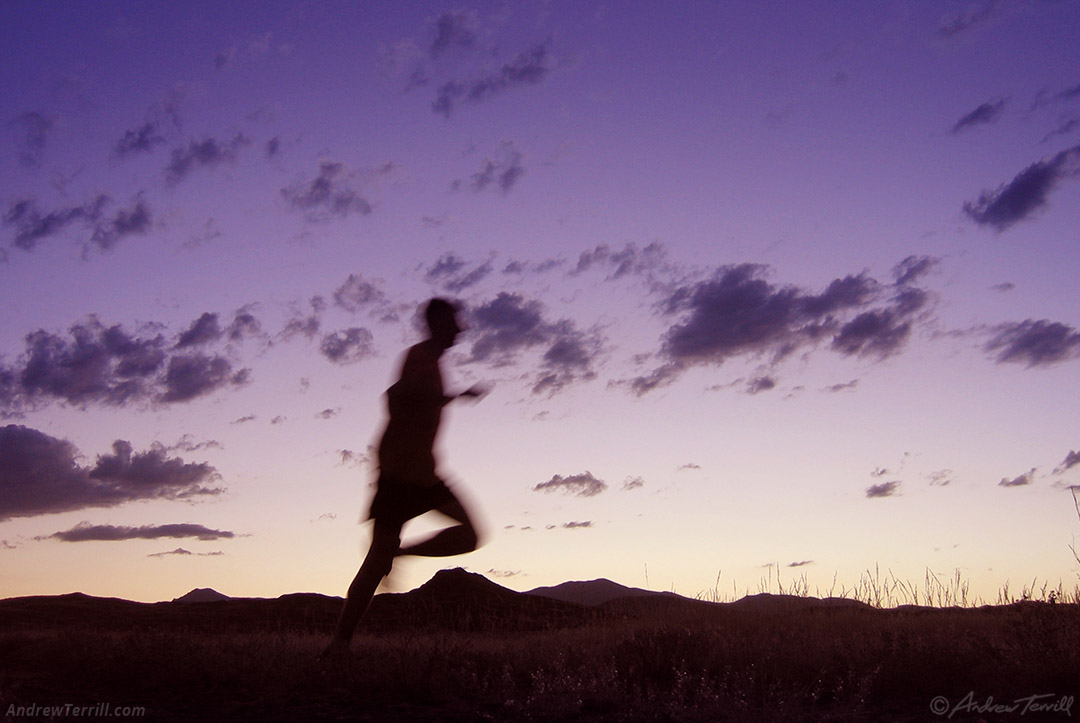
The final route featured the longest continuous climb. I resolved to give it my best, to leave it all on the trail. I ran at twilight with the sun hidden behind the Rockies, with my shirt off and no UV risk, and I bullied my protesting body up the ascent, then released the brakes on the way back down… and I flew, reminiscent of the runner I’d once been. My legs and feet remembered what they’d once been able to do so efficiently. The landscape blurred. I ran in tune with myself and the earth underfoot, living to the full, lost within the moment, giving my body permission to do what it had evolved to do – move – and I finished with emotions buzzing, feeling fiercely alive as though I was ten, twenty, even thirty years younger. Doubled over at the end, half-panicking at the sudden absence of oxygen, I felt physically beaten. But oh how my emotions soared.
I am still who I once was! I can still feel… all this!
I AM alive!
Later, after all the competitor’s times had been tallied up, I discovered that, compared with my peers, I’d done okay. I’d finished twelfth out of the 183 runners who’d completed all five routes, first in my 50-59 age group, and would have scored second in the next age group down. Admittedly, my time (four hours twenty-five minutes) was a full minute-per-mile slower than I’d once have run, but with many of the downhills taken at sub-five pace I’d still been able to re-inhabit the thrilling state-of-being I’d once known well. The rush of flying across rough ground, of engaging with nature through a body functioning at its limit, of moving with the heightened senses and instincts maximum effort can bring, of taking in details in an intense snap-shot way, of seeing familiar mountain and forest landscapes pass by in quick succession, of ‘reading’ the earth ahead in a fraction of a second and adjusting to its rapid changes, and most of all of the roaring soaring I-am-alive exhilaration – all of this had more than justified the decision to ‘race’.
High speed had brought high rewards. The most unexpected, however, was how I felt after the event: like a renewed version of myself, even a new version. I felt, to put it plainly, reset.
The last couple months have been difficult. Feeling reset was priceless.
——————————————————————————————————
Two days after the race I made a spur-of-the-moment decision to visit my local hills in a totally different way, to balance speed with slowness, to give full attention to each step, to truly feel the earth underfoot rather than race over it.
I decided to go barefoot.
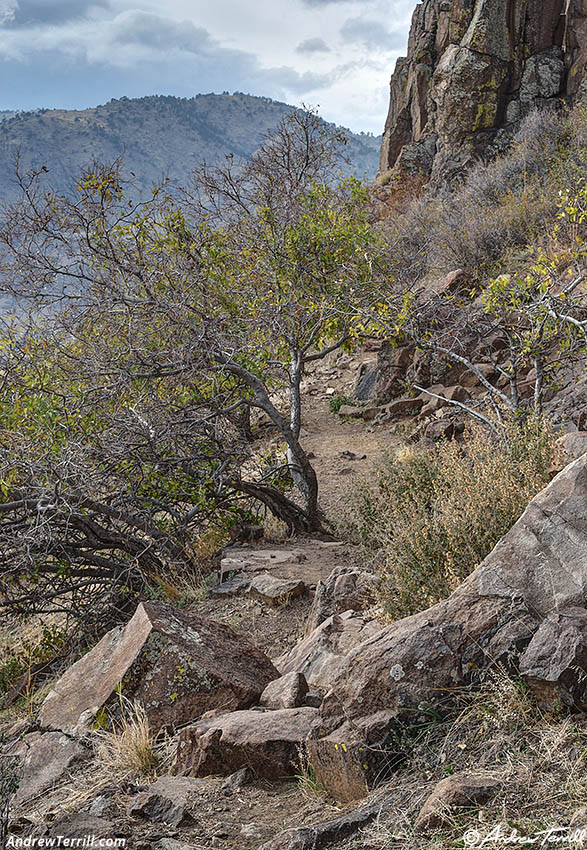
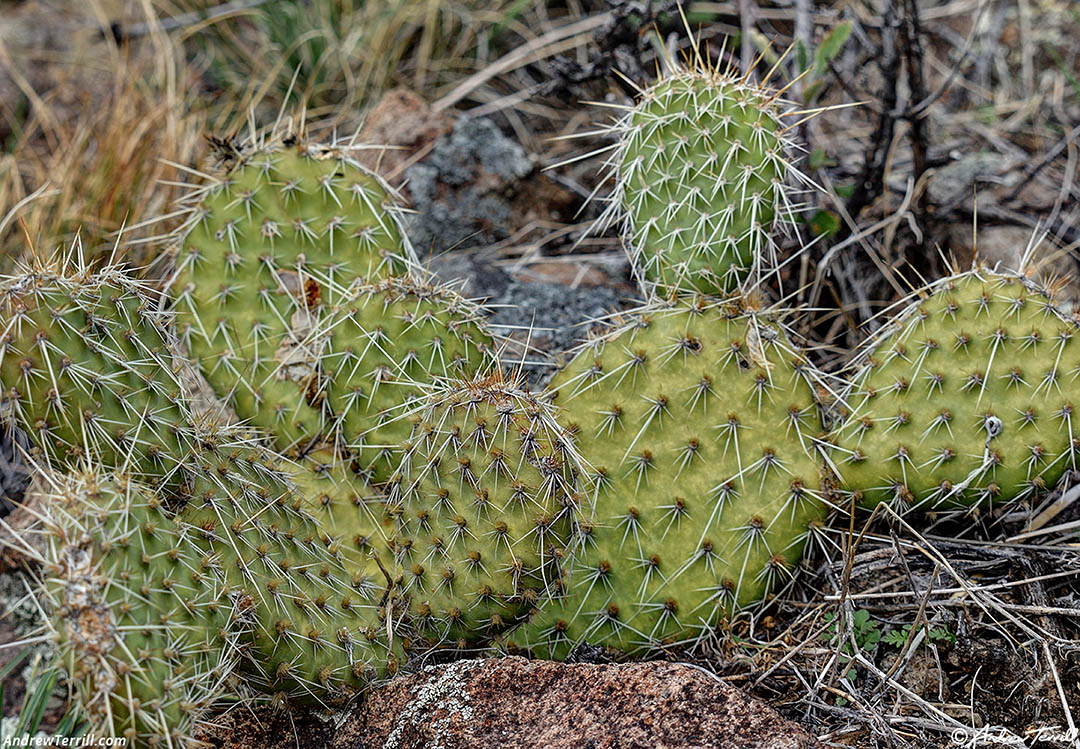
I did it on the mountain directly above my home, arguably an odd choice. The mountain, you see, is a rough, prickly, hard-edged place – a real ‘watch your step’ kind of place, even to someone wearing shoes. The trails are rocky and gravelly, the plants are spiny and sharp, and the local residents (like rattlesnakes) are definitely not to be stepped upon. (I accidentally stepped on one in my front yard this summer. But that’s another story. However, I discovered that when I really need to I can still move exceptionally fast!)
Unsurprisingly, I’ve never seen anyone crossing the mountain sans-shoes. But that’s a shame because, when you think about it, ‘no shoes’ is natural. After all, none of us were born with shoes on our feet! And as a species we spent millennia managing without them.
Over recent years I’ve sought to manage without them as often as I can. I typically run barefoot once a week, although always on flat, grassy paying fields, not prickly mountains. I habitually wander barefoot around camp during the snow-free months, happily trek a few snowy yards to the mailbox in winter, and – as someone who works from home – spend most of my life unshod. I’ve grown to love being barefoot, grown to hate having my feet encased. (Or, let’s call it what it is: imprisoned.) I’ve spent years using my feet fully, giving them freedom to work the way nature intended.
On the other hand (or is it on the other foot?), I’ve only walked short distances on truly rough terrain – and the mountain above my home is truly rough. Going barefoot up it was going to be a big step up, figuratively and literally. I’d need to walk with respect.
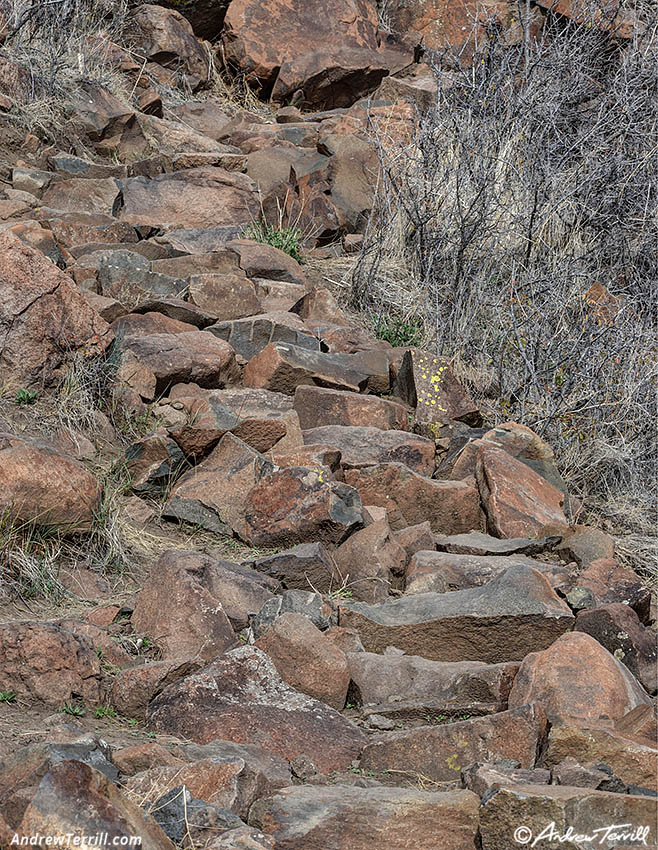
So, respect was what I gave the mountain. I began gently, cautiously, precisely. Each footstep was keenly observed, carefully considered, deliberately made. Each time I lowered a foot to the ground I did it softly, even onto spots that looked smooth and safe. Each step was a careful exploration, a caress, a tentative sole-to-earth kiss. So slow were my steps that I couldn’t truly tell when each had finished, when full weight transference between one foot and the next had been completed. There was subtlety to the act. I’d brush the next destination with sensitive probing toes, or with the padded ball of the foot, or with the thickly-padded heal, then ease the rest of the sole down into full contact. I’d feel complex micro-adjustments occur underfoot without conscious involvement of my own as though my foot knew what to do, even if I didn’t. And then, at the conclusion of each step, there I’d be: standing upon the earth, and in no discomfort whatsoever. Through taking each step deliberately, even the roughest spots became usable. Bare feet smoothed the mountain.
Of course, progress was outrageously (and comically) slow. The handful of fellow trail travelers I met, all of whom passed me at faster speeds, wore bemused expressions that essentially said: WTF are you doing you weirdo? But I didn’t care. I grinned the silly I’m-in-nature grin that I often grin, and moved on at less than one-mile-an-hour, not the twelve-plus-miles-an-hour I’d run only days earlier.
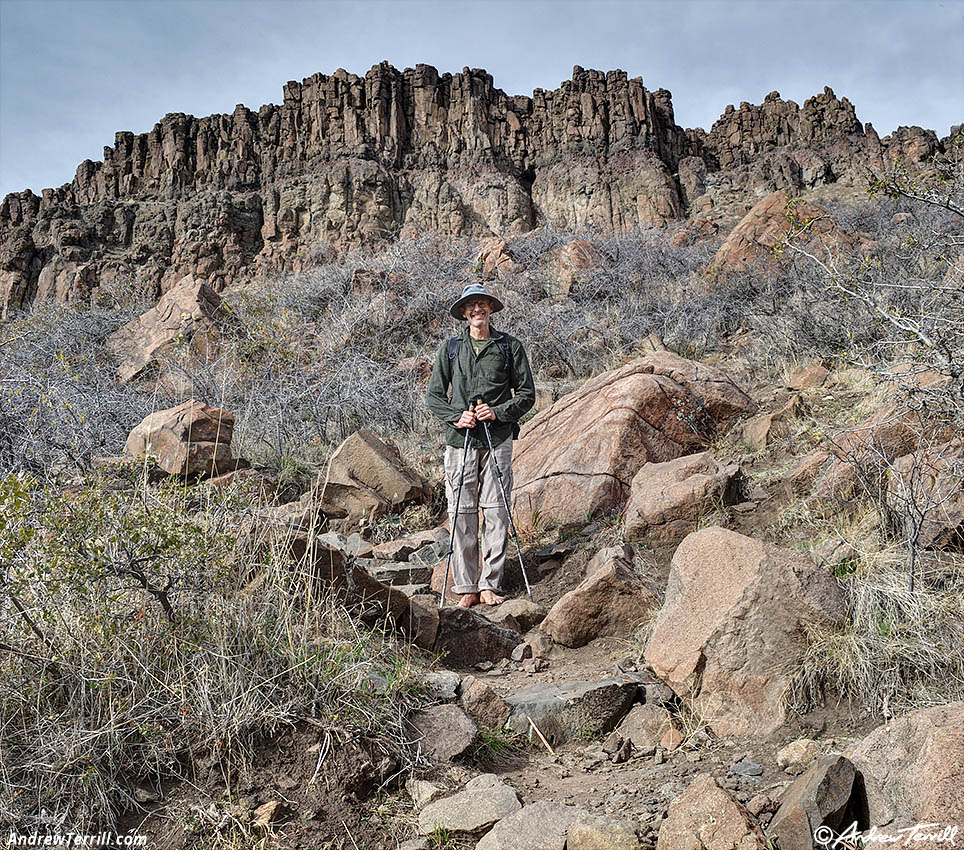
The slower pace, however, wasn’t a lesser pace. Far from it! Each step became something special. Each was unique. Each unlocked a richness of experience that no quickly-taken step, and no shoe-shod step of any speed, ever could. Each step unlocked textures one wouldn’t have known were there. Each unlocked immense diversity. And each step unlocked beauty – extraordinary unsuspected beauty. Who’d have thought the earth underfoot could feel so beautiful, and feel so good, and in so many different ways? Who’d have thought mere footsteps could deliver such intense sensual pleasure?
Okay, perhaps you’ve thought such a thing, or have experienced such a thing. Perhaps, the reality that pleasure and beauty can be found underfoot is obvious to all. After all, we find beauty and pleasure through all our senses, so why not also through the touch of our feet? Our soles contain some 200,000 nerve endings, which makes them massively sensitive, far more than most of our body’s other surfaces. And yet we typically bind our feet away, surround them with defenses, neglect them, take them for granted, seldom even think about them – except when they hurt after a day in shoes. But oh what we miss because of it!
I walked on, up my mountain, toes curling around rocks and stones, soles micro-adjusting, nerves feeling it all. I walked onwards and upwards, relishing the felt earth beneath my feet.
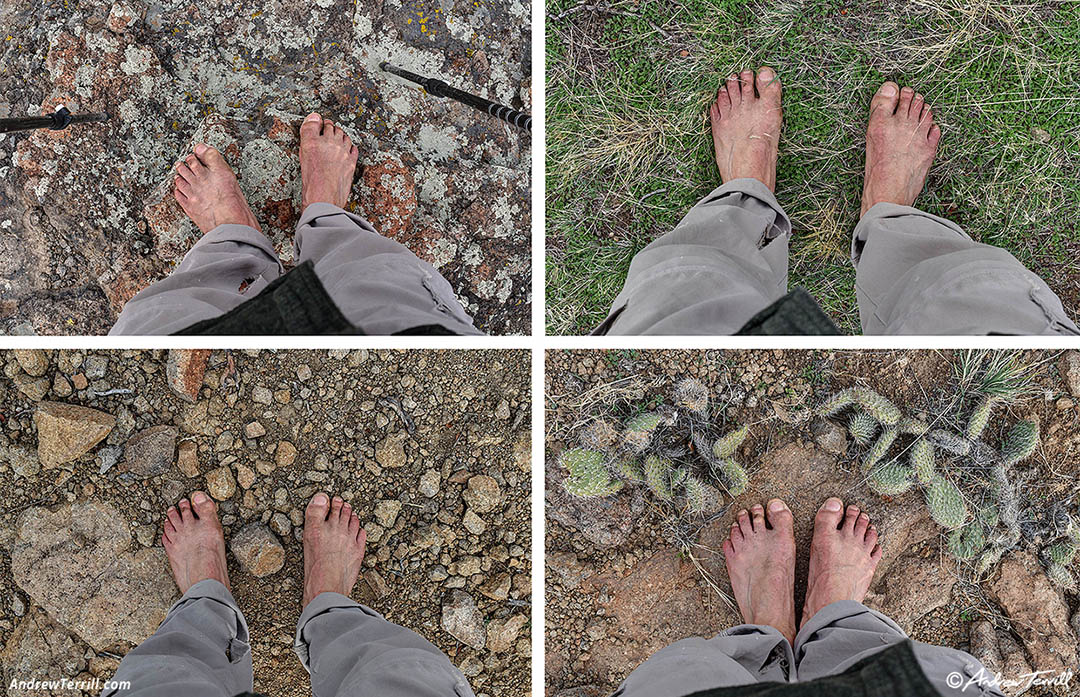
I soon learned which surfaces were friendly and accommodating: the hard but smooth basalt slabs and boulders – delightfully sun-warmed on a sixty-degree November day; the soft sand-drifts which molded themselves to the shape of my feet; the rare heavenly carpets of living groundcover. I learned which surfaces were less welcoming: the stretches of sharp broken rock; the marble-sized gravel; the patches of brittle, dried-up, sharp-pointed grass. Naturally, I avoided the cacti and yuccas, and the mountain mahogany thickets. Some surfaces don’t need to be experienced! From rock to rubble to sand to plant I experienced the mountain’s rich surface more fully than I’d ever experienced it before. I connected with it without barriers getting in the way. I became more thoroughly earthed and grounded. I became rooted, not only into the earth but also within each immediate moment. Life shrunk to each step, yet expanded, because each step revealed an entire world underfoot. I walked barefoot and gained a depth of knowledge no one wearing shoes can possibly gain. I walked into a new relationship with the mountain, one more intimate than I’d ever had before.
So THIS, I thought in awe, is what the mountain REALLY is!
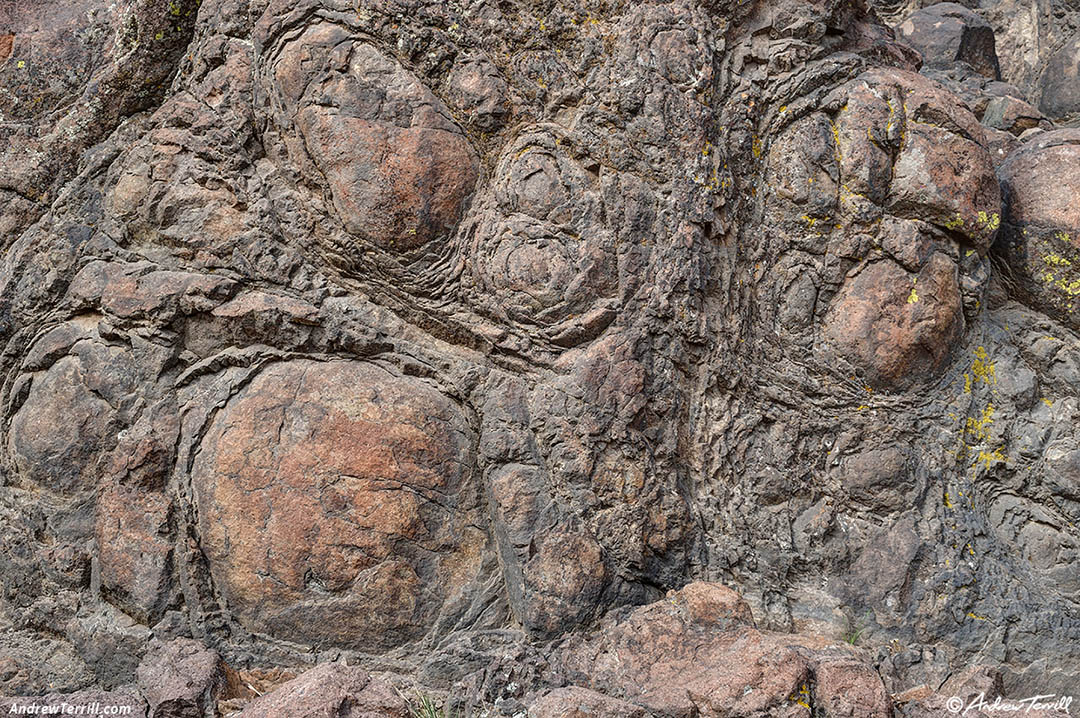
The walk was completed without mishap or misstep, without even a single miniscule scratch. Sure, the walk wasn’t long, only two miles. It only lasted two and a half hours. And it only crossed ground I’d crossed hundreds of times before. And yet, barefoot transformed it into a long walk – long in a positive so-much-happened so-much-was-experienced way. And it transformed the very ground I walked upon into new ground, into ground even more sacred than it had been.
I felt buzzed afterwards – but a deeper kind of buzzed than I’d felt after the final race. It was tied less to exercise-induced endorphins and more to an altered way of seeing – and an altered way of feeling. I felt as though I’d found a new way of experiencing nature; as though an entirely new journey had just begun, a thrilling feeling that stripped the decades away. I felt renewed again; reset again. Bizarrely, my feet felt reset, too. Or perhaps awakened is the right word. My feet felt so awake and stimulated I barely recognized them. It was as though they’d begun a new and heightened way of operating.
I am alive! My feet are now alive, too!
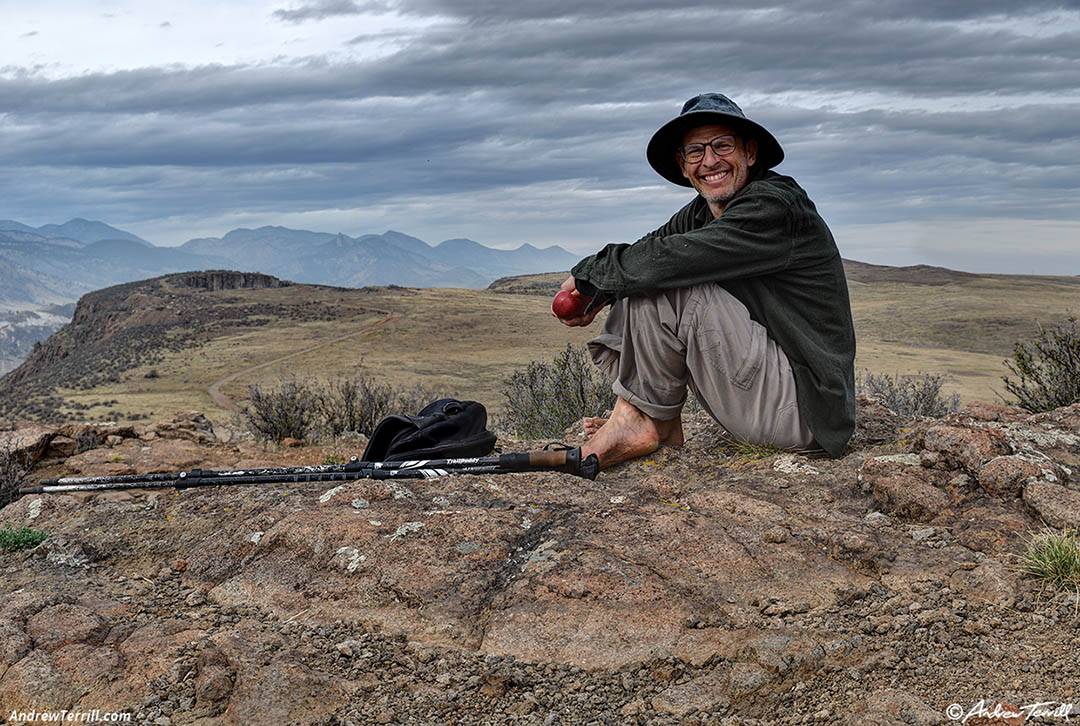
It wasn’t that barefoot was better than shoe-shod, or that slow was better than fast. It was simply different. It was extra. It was another way to know nature, to experience truths about a place that can’t be experienced any other way.
It was something I’d be doing a great deal more of.
And it prompted a question that you, dear (greatly appreciated) reader, can answer for yourself:
Can a place out in nature – even a much-visited much-loved place – ever be a known place if it hasn’t been walked upon barefoot?